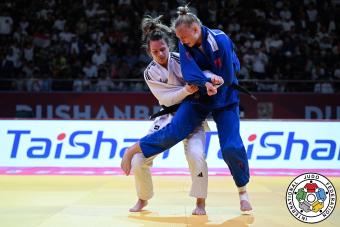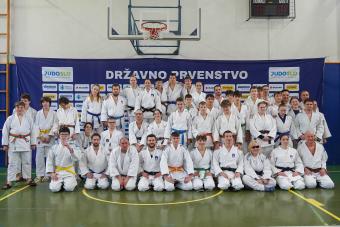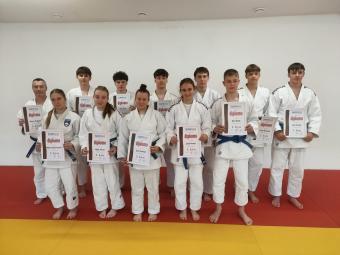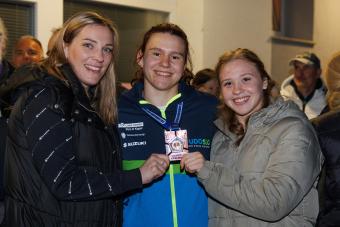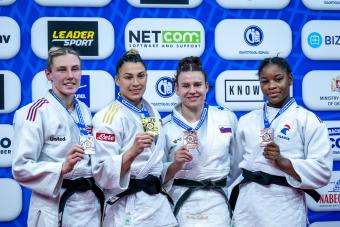


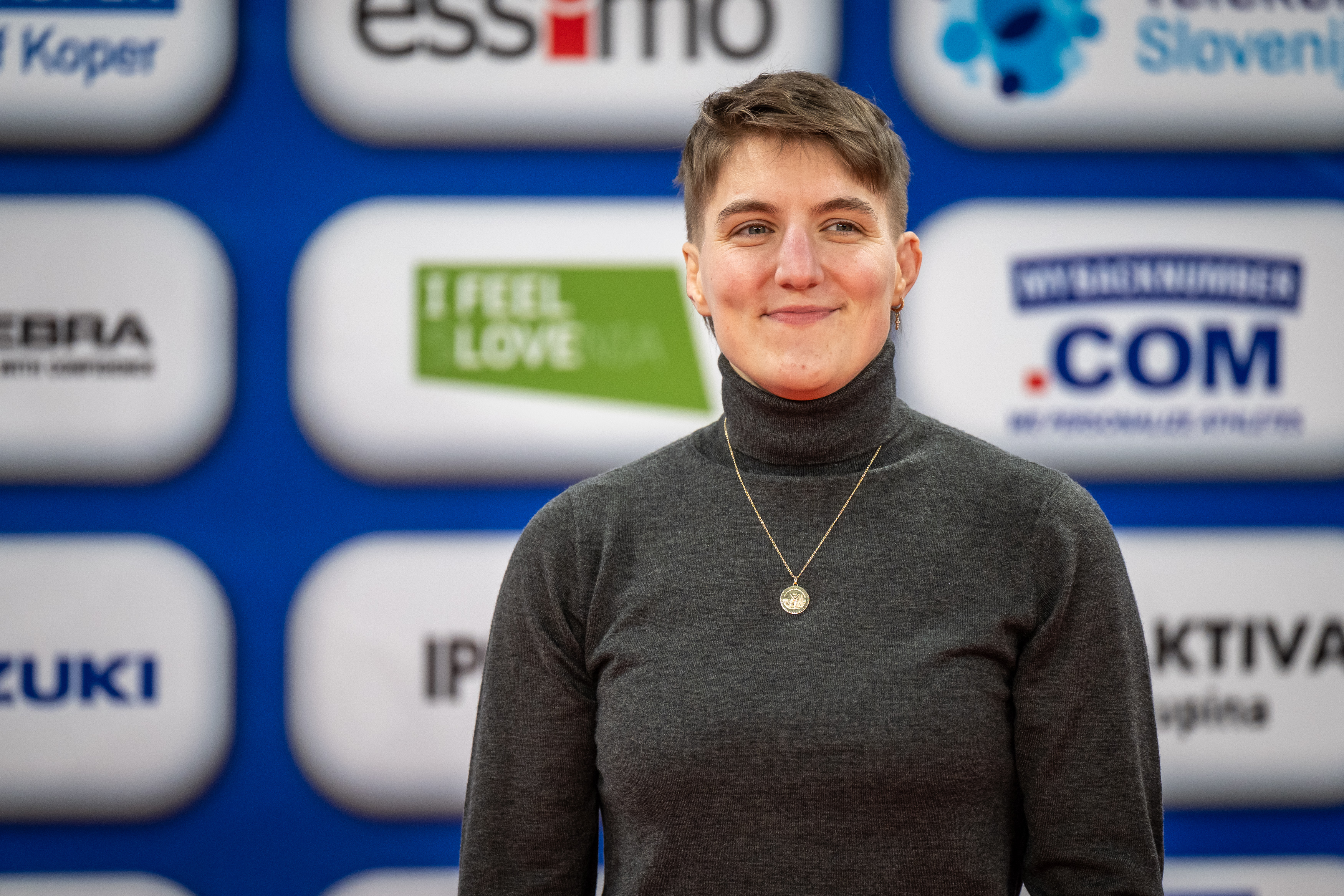
One week ago, at Arena Stožice - where the largest judo event in Slovenia, the World Cup, also known as the Ljubljana European Open 2026, took place - Andreja Leški officially confirmed that she was ending her sporting journey. She bid farewell to fans, fellow competitors, coaches, and friends with an emotional speech, which we publish in full below:
Judo taught me to stand up when it was hardest and to step away when it’s time.
Today, here on my home tatami, I am ending my competitive career.
Thank you for being part of my fight. And part of my growth.
Judo didn’t lead me only to victories. It taught me life. Adaptation. Persistence. The courage to fight.
To fight for myself, for my team. To fight for justice and equality. And to fight until the very end.
Even before the Olympic Games, I knew this would be the last time. I realized I no longer need another competition to know who I am. I don’t need one more proof to allow myself to exist.
I am proud of myself for building another story alongside sport. One that was entirely my own. Friends. Studies. Work. Joy. Love…
Without that story, it would probably be much harder to stand here today and say that I am not returning to the competitive tatami.
A sincere thank you to everyone who stood by me.
To everyone I was able to learn from.
And especially to those who made me feel that I am enough even without medals and titles.
Thank you to all the fans who allowed me to share my joy and my happiest moments with you. The people around me made this story more beautiful and, above all, more human.
Thank you to my family, whom I love the most in this world.
Thank you to my girlfriend for all your support.
And thank you to all the partners and sponsors who believed in me.
I am leaving competitive judo, but I carry its values with me. I want to continue inspiring people with my story, helping them believe in themselves, and using my experience to help someone else chase their dreams.
And if I can leave one thought here today, on this tatami, for all athletes:
Invest in yourself. Not only in results, but in yourself as a human being.
Give everything you have. But never at the cost of yourself.
Results come and go.
But you are the one who must remain.
Thank you.
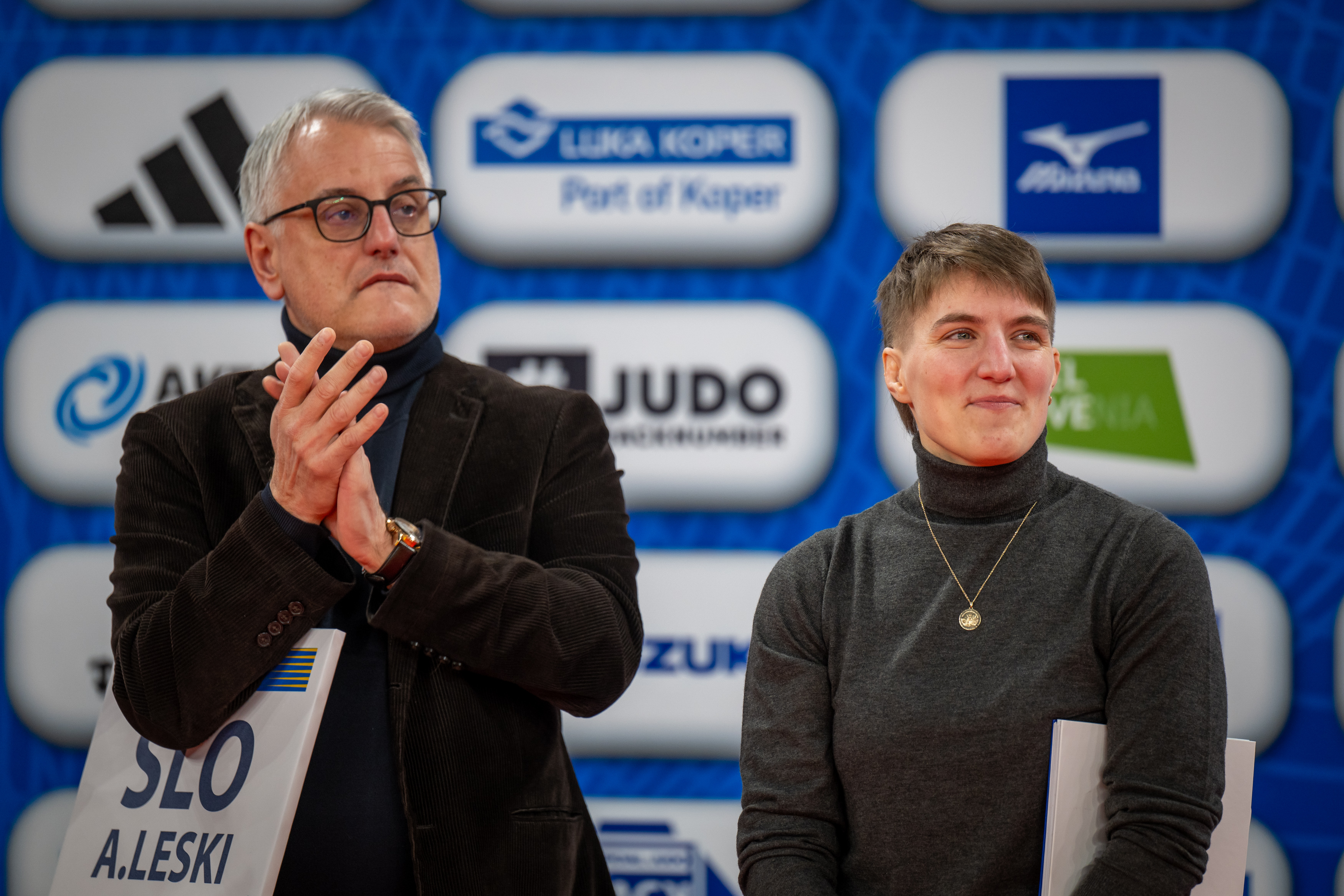
On this occasion, you can also read an interview with Andreja conducted for the Slovenian Press Agency (STA) by Aleksander Gasser.
Leški: I realized I didn’t have the right reasons to return to judo
Paris 2024 Olympic champion Andreja Leški is bringing her sporting journey to a close. The judoka long hesitated between retirement and continuing, as she sought motivation in the world champion title - the only major title missing from her rich sporting career. In the end, she realized she lacked the true motivation to return and has therefore decided to retire.
In addition to her Olympic medal, the athlete, who turned 29 a month ago, also holds a European champion title and has won a total of four medals at the European Championships. She claimed two silver medals at the World Championships. On the World Cup circuit, Leški stood on the podium 24 times, and on four occasions listened to the Slovenian national anthem in her honor.
Much is known about her achievements; some of her matches—such as her victory over France’s Clarisse Agbegnenou in the semifinal of the Paris Games - are unforgettable. But judo is more than visible success and medals. There are many joyful moments, many difficult ones, and decisions are never simple.
A year and a half after her Olympic victory in Paris, the decision to retire matured. How?
Honestly, I already had the idea before the Olympic Games that I should slowly bring my career to an end. It had all become too much. Judo takes so much of your time and energy. Gradually, I felt that everything I had invested outweighed the good it had given me. Then came the fairytale ending in Paris… After winning gold, the decision was a bit easier, but it’s not black and white - it’s far from simple.
On the one hand, you say you had already decided before the Games, but on the other hand, last year you announced you would compete at the World Championships. Why weren’t you in Qatar?
The idea returned that I would try to become world champion. I have two silver medals from those competitions, and it’s the only major title missing from my career. Everyone around me was encouraging me as well. In a way, it’s normal to keep going, and in this circle no one is used to thinking about not continuing. I got caught up in that idea too, but then I discovered within myself that I didn’t have the right intention to return to judo.
How did public expectations; those of club teammates, sponsors, fans, family, and everyone expecting new competitions and appearances affect your decision?
During my career, I wasn’t burdened by others’ expectations or outside influence. Maybe now, for the first time, I felt that people were curious about what would happen next, but they didn’t know how I would decide, what was true and what wasn’t. Everyone must understand that athletes are only human and that sport will continue. At some point, we are part of that story, but there are many other sports, many young talents, and with them sport will write new unforgettable stories. I reached the point where I had to listen to myself and live my own life.
Mountaineer Nejc Zaplotnik wrote in his book The Path that whoever seeks a goal will remain empty once they achieve it. Did that happen to you after the Games?
No. My journey was never focused solely on sporting goals. And for me, nothing is ending now in such a grand way that I would say: I achieved this and now everything is over. I have new goals. Even before, alongside sport, I studied, worked, had hobbies, and personal goals. Of course it’s difficult - this was a big part of my life, you get used to the rhythm and the people - but it’s not everything.
As recently as December, at the Mihael Žgank Academy in Celje, you seemed completely part of judo, which suggested we would still see you on the tatami.
Judo is much more than the competitive part we see in the media. There’s no doubt that I love judo. It’s part of me, and when I put on the gi and face someone, I truly come alive. But that’s only one piece of the whole.
In clubs, we have children, inclusion programs, para-sport… Within all that, if you want to be a good judoka, you have to build yourself, be mindful of what you do and who you spend time with. I moved along that path throughout my career, because sport is more than training. In Celje, we presented that to young people and gave them plenty of advice for training and competitions, which I truly enjoyed.
You’ve been in judo for more than 20 years and achieved numerous successes. What were the hardest, lesser-known periods for you?
In elite judo, the constant weight cutting for competitions was extremely difficult for me. At times, it’s truly awful. On a human level, I was often hurt by the pyramid structure of sport. The longer you stay in elite sport, the more people you started with drop out. There are fewer friends, and you search for motivation and drive when training becomes more and more focused on top-level sport and increasingly demanding. Through all this, I always tried to let go of expectations and pressure and look at things broadly.
It surely wasn’t easy, especially considering you moved from Koper to Ljubljana at 15 because of sport. How did you adapt?
At the beginning, it was quite demanding. I didn’t know what awaited me. My coach Mitja Železnikar was crucial before I became an adult, he took care of me in Ljubljana. I had a good mentor, and I still see him that way today. He was a constant who made that period easier. Still, it wasn’t easy. In a new environment, I was without family and at first without friends.
Looking back, I see that my family and I were always strongly connected. If anything happened, my mom was first in my contacts. They followed me, knew my struggles, ups and downs, knew when things were tense and when less so. Most importantly, my parents knew when to give me space and when to offer advice or criticism. I also think I was mature and level-headed enough not to fall into extremes that would have led me astray. Judo was always the red thread. I knew why I left home, and I stuck to that.
Alongside all your elite achievements, you completed your studies and later found your first job. Many athletes lack the time or will for that. Any advice for young people?
I’m fortunate to be very curious. I like hearing new things and absorbing knowledge from people around me - it’s something innate. Then it’s about time management. You have to schedule time for both sport and studies. Every athlete must understand that education broadens the range of what they can do after their career. They also need to know that tomorrow they could get injured, fall ill, or face a dispute in their club.
In such cases, you need another option. It doesn’t have to be formal education, but it must be some kind of knowledge or activity. The worst thing is to think you’ll only stay in your sport and perhaps become a coach. Coaching is, in my opinion, one of the most demanding jobs. A coach must not only have sporting knowledge but also be a good educator who prepares athletes for what awaits them during and after their career. Perhaps at this point we should reflect in sport, as it is too quickly becoming a professional business focused on specialization. Many overlook that there are many other important areas of knowledge essential in life.
Returning to Zaplotnik - what goals will you pursue on your new path?
I need to stand on my own two feet again. I want to stay connected to sport. As an Olympic champion, I have significant leverage on the market, and now I want to establish myself as a mentor and speaker. I believe I can show and tell people a lot to motivate them toward their goals. I’m still connected to judo and studying sports management… But working in an office eight hours a day from Monday to Friday is something I truly can’t imagine right now.
You’ve told us a lot about life, less about the year and a half after the Olympic Games. Where did you spend it? We know you went to Thailand for three weeks.
Alone, with a backpack… I also went diving there, down to 20 meters, and the country, both underwater and above, is completely different from what we’re used to. There were also concerts, because I enjoy some commercial pop. I like Taylor Swift, Lana Del Rey, Lola Young… I’m very broad in that area. I spent six years in music school, playing the flute, singing in a choir, and performing in an orchestra. I feel music deeply and simply listen to very different genres. Sometimes a song is beautiful just because it reminds you of a certain moment.
Unlike many athletes, you announced your retirement quite early. This will likely affect some sponsorship contracts, perhaps even the car you use, and you will lose your public administration job. You could have maintained that status for some time. Why not?
How difficult an athlete’s position is becomes clear from the fact that many are afraid to say their career is over. We will need to think about how to regulate social security in the transition period so it doesn’t depend only on a public administration job or a sponsor. As for me, I’m not afraid of what comes next, and it would seem pointless to mislead my surroundings.
I took time to see what I want in life, I weighed the decision of yes or no regarding the World Championships. Now I’ve decided, I’m at peace with it, and I’m ready to share that with the public.
Athletes usually thank many people who helped them on their journey. At this year’s Olympic Games in Italy, organizers surprised everyone with the idea that each Italian medalist could choose four people who would receive special merit medals at a ceremony in Rome. At the end of your career, whom would you choose?
Four is actually very few. I would certainly give two to my parents, but since there are so few, they would get one and have to agree between themselves how to share it. Another would go to Mitja Železnikar, who not only took care of me but instilled in me the idea that I have great potential and value. One would go to my last coach, Luka Kuralt, and one to Kaja Kajzer, who was my sparring partner the longest and worked tirelessly with me in training.
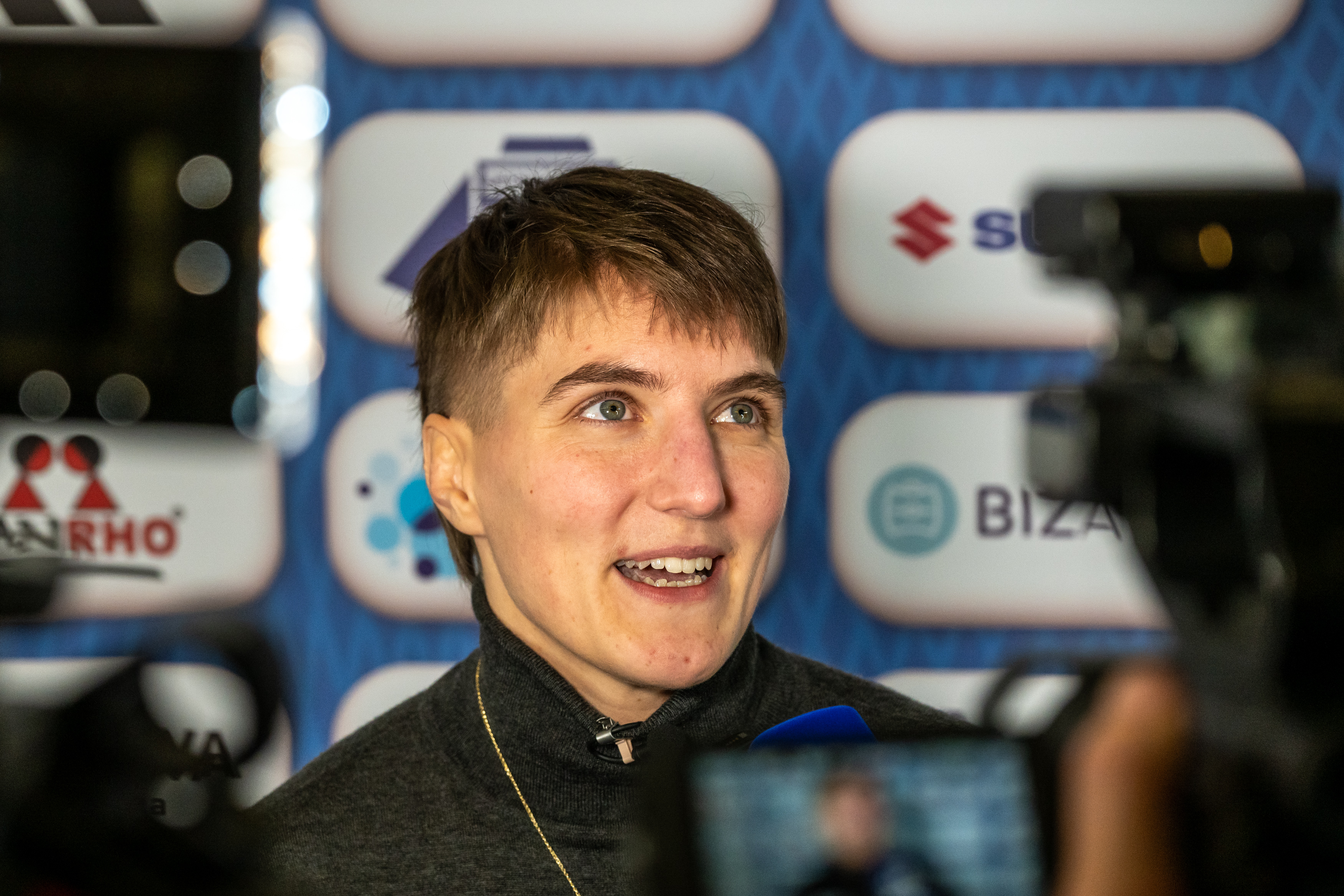
Andreja Leški’s Greatest Sporting Achievements:
Olympic Games (OG):
-
1st place, Paris 2024
World Championships (WC):
-
2nd place, Doha 2023
-
2nd place, Budapest 2021
European Championships (EC):
-
1st place, Montpellier 2023
-
3rd place, Zagreb 2024
-
3rd place, Lisbon 2021
Other achievements:
-
1st place, Grand Prix, Zagreb 2021
-
1st place, Grand Prix, Marrakech 2019
-
1st place, Grand Slam, Düsseldorf 2018
-
1st place, Grand Prix, Agadir 2018
-
2nd place, Grand Slam, Astana 2024
-
2nd place, Grand Slam, Tashkent 2021
-
2nd place, Grand Slam, Tel Aviv 2021
-
2nd place, Grand Slam, Abu Dhabi 2018
-
2nd place, Grand Slam, Baku 2017
-
2nd place, African Open, Tunis 2017
-
3rd place, Grand Slam, Tashkent 2024
-
3rd place, Grand Slam, Ulaanbaatar 2023
-
3rd place, Grand Slam, Baku 2022
-
3rd place, Grand Slam, Abu Dhabi 2021
-
3rd place, Masters, Doha 2021
-
3rd place, Grand Slam, Düsseldorf 2019
-
3rd place, Grand Slam, Paris 2019
-
3rd place, Oceania Open, Perth 2019
-
3rd place, Grand Prix, Budapest 2018
-
3rd place, Grand Prix, Tashkent 2018
-
3rd place, Grand Prix, Tbilisi 2017
-
3rd place, European Open, Bucharest 2017
-
3rd place, Grand Prix, Tashkent 2016
-
3rd place, Grand Prix, Ulaanbaatar 2016
Achievements in younger age categories:
-
3rd place, Junior World Championships (U21), Abu Dhabi 2015
-
2nd place, Junior European Championships (U21), Malaga 2016
-
3rd place, Junior European Championships (U21), Bucharest 2014
-
1st place, Cadet World Championships (U18), Athens 2014
-
2nd place, Cadet World Championships (U18), Tallinn 2013
Source: Slovenian Press Agency (STA)